blurring the edges


You might remember a post from a week or so back, in which I looked for examples of blur in my post photographs. The result was that I discovered that, by far, most of the blur that I place in my images is in the form of motion blur.

Last weekend, as I was out and about, I looked for opportunities to include other non-motion blurs in my photos. You can see the results in these images. The first was created by shooting through the condensation on a window pane. The second was achieved by shooting the reflection in a glass block.

The greatest result was proving that you can teach this old dog a few new tricks.

Have a grea tweak folks. Try to pick up a new trick of your own.

Tim

blur

This month, Kat Sloma has an interesting post about intentially using blur in our photography. My mind instantly thought of motion blur and depth of focus. However, Kat came up with many other thoughtful takes on using blur for artistic purposes.

As usual, Kat's posts have me thinking about my own work and looking for examples of her thoughts in my images.


Walking the Great Wheel


Driving Underground


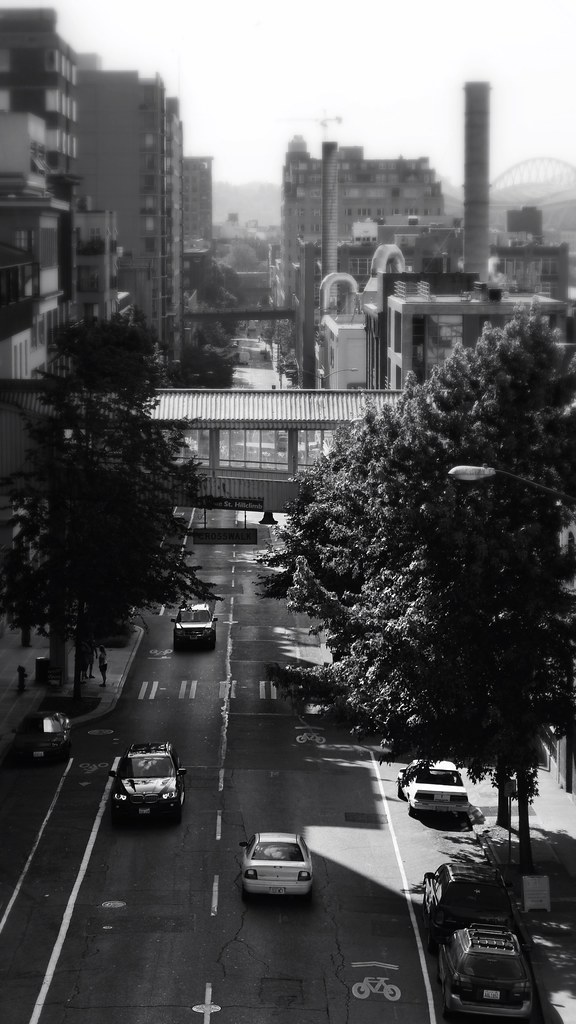
Looking Down the Steet


Morning Departure


balloon Hats and Banjos


Autumn Old Glass 1


The Out Take


What I learned from looking through my recent images is that most of the blur I use is motion blur. Maybe I need to take Kat's post to heart and think of other forms of blur that I can work into my photography.


reading hour

That’s my sister and I using Dad as a jungle gym while he’s trying to read something technical and uninteresting to the two of us. Kelly and ire are rocking those footed Jammie’s while Dad is sporting a classic ensemble of cuffed cords, fancy socks and penny loafers. Mom has always ensured that he dressed well. After all, he is her trophy husband. Isn’t that so Dad?

Who’s idea was the hat?

the lights of night

There is Hope in the Night


The subject of this month's Exploring with a Camera is the lights of night. 


In the Pre Dawn Cold, They Came Running

As a reult, I have been keeping my eye open for any intersting night light scenes and have come up with a couple of new ones as well as some older shots.


Fire Escape Mod 1


Of course, I am just as likely to creat one from whole cloth when I feel the need. The image above is just such a figment of my imagination, as it was shot in broad daylight.


Barn Dance 3


Up Way Too Early


Barn at Dawn

If you are a photographer interested in interesting monthly challenges, check out Kat and crew by clicking on the following button.

looking at 2012

Photo book
Looking at 2012

Every year, I create a book of my favorite images from the previous 12 months. This years book Looking at 2012 is finished and off of the presses. I give the book to family and friends that have supported my hobby. It’s also a great way to protect my photos from my greatest fear… lightning taking out my back up drive.

If you are interested in seeing this year’s effort, you can download the PDF here:

http://www.ephemerallife.com/File_Storage/Looking%20at%202012%20Small.pdf

What do you do with your favorite images? Do you print them out and hang thm on the wall? Do you give them to friends and family? Feel free to share your creative ideas in the comments.


visiting with Annie

Annie Leibovitz Exhibit


Today, I joined a friend of mine for a visit to the Annie Leibovitz exhibit at the Ohio Stake University’s Wexner Center. What can I say other than the woman’s images are incredible. I felt as though I was looking at a real master’s work. Not only did we get to see her iconic portraits, but we also got to see landscapes and still life’s. it was almost overwhelming. I don’t often gush about another photographer. However, I think you would be gushing as well if you were there to see those incredible prints.

Unfortunately, no cameras were allowed and I can’t take you any further than this photo of the gallery entrance. If it helps, just close your eyes and use your imagination. Did that do the trick?

the evolution of a great image


Step one: take the picture. I saw Debbie standing at this window and knew the scene would be a great image. So, I adjusted the camera and took the shot. I wanted to have some sense of what was outside of the window and also wanted to use chiaroscuro in the image. It’s helpful to have an idea of what results you want before you press the shutter button. I find it’s much easier to make the heavy adjustments in the camera than in post processing.


Step two: post process the image. My typical process with an image of this kind is to convert to black and white, so that I can get a handle on the tones. I can see them better without the distractions of the colors. I then switch back to color to make my initial adjustments. I could tell that I would have to lighten up the image quite a bit. I made my initial adjustments in Aperture. On the Mac.


Step three: step back and re-evaluate the image. In the case of this photo, I thought the brightness and contrast still needed adjustment. I also sought the advice of some fellow photographers. I was unsure of how far I should brighten up the image. Advice in hand, I had another go at the image. This required me to switch to PhotoShop. I would need the power of adjustment layers and layer masks.


Here, you can see the final image adjustments. I’ve significantly brightened the image overall, especially on her back. However, I was sure to keep the dark shadows under the window. This was done to force your eye upwards and away from the floor. I did leave the highlight on the floor to give some balance, I just didn’t want your eye to stay there. Notice that I used the contrast between the shadows on the wall beyond her body and the highlights on the front of her to make her stand out from the background.

I think the result is an effective image. We can’t see what she is looking at, leaving the subject of her gaze to our imaginations. We get to interpret the image, making up our own story.


I applied the same process to a second image from the same shoot. Getting two nice images from the same moment is as successful as you can hope to be. As much as I like the resulting images, I enjoyed the collaboration with other photographers even more.

You should take part in your own photo community. Chances are that there is a photography group in your area. Chances are even better that you can join a vibrant community online. Give it a try.

Also, don’t be afraid to re-visit an image. I slept on this one before making the final adjustments. Sometimes having a fresh look at the picture is what you need to take your work to where it needs to be. Most importantly, have fun all along the way.


what happened to the American dream

What Happened to the American Dream?


This is one of those scenes you see while driving along and know that you need to get a shot of it. I had to circle the block and come back. I simply rolled down my window and grabbed my camera off of the passenger seat. There is a lot of fun in this kind of spontaneous photography. If you don’t practice it, I encourage you to give it a try. Of course, you will always need to keep your camera with you. A point and shoot will do nicely. So, don’t feel as though you need to lug all of your gear around all of the time. The point is to be spontaneous and to have fun.


lake experiment

Foggy lake
Lake Experiment 1


Do you ever get inspired to try out new techiques in your photography? I am always in pursuit of some hidden or undiscovered photography knowlege. I am convinced that after years of experience, I still have a lot to learn.

During a recent foggy morning outing, I decided to experiment with low contrast images. My goal was to create images that were recognizeable (no abstracts) while at the same time, use a minimal number of tones.


Foggy lake experiment
Lake Experiment 2


This is a new approach to landscape photography for me. The images certainly lack any sense of drama. On the other hand, they have a serenity and calmness to them that stands out. While they were shot in color, black and white seemed to be the way to go. I made the conversion from color in Aperture, adding 15% sepia to the images in the process.


Foggy Lake Experiment
Lake Experiment 3


Sometimes the value of an experiment is in the learning that the process triggers. Other times, it's in the end results. For me, I am pleased with the results in these images. It's taken me some time to get used to the low contrast tonality of the images. However, I am beginning to think that they can stand on their own. They certainly bring a new look and feel to landscapes. I think the emotional content has changed as well. I suppose that you could say that they have grown on me.

What do you think about the results of the experiment? Would you take this approach to your landscape images? What recent photography experiments have you conducted?